
Is LoRa Geofencing Actually Useful?
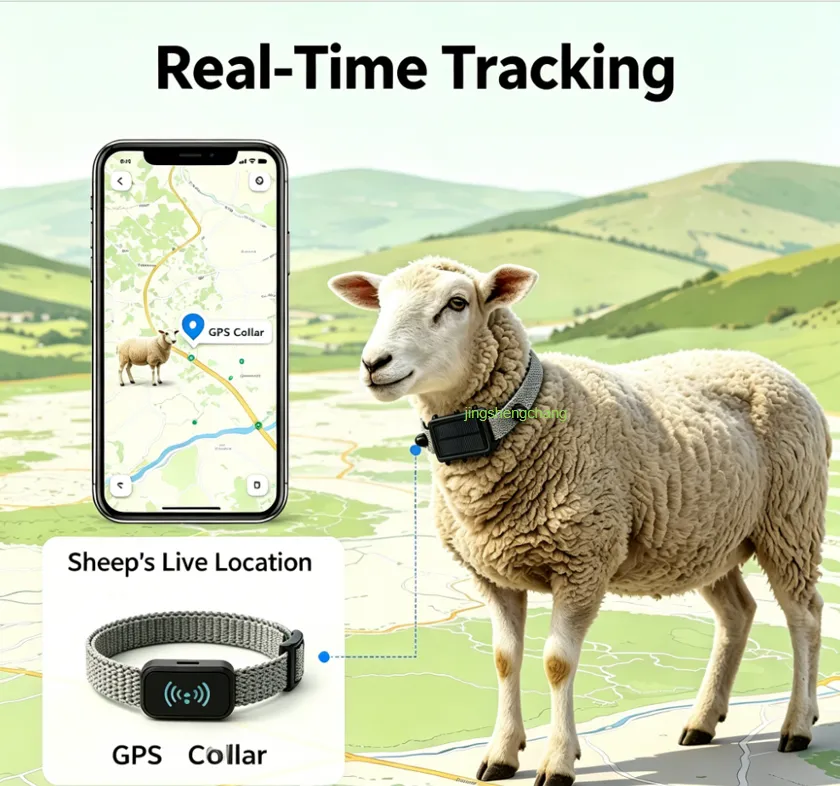
Yes, LoRa geofencing is highly practical. However, it is important to understand that LoRa handles data transmission, while GPS or BeiDou determines the device's location.
Therefore, the performance of a LoRa geofence mainly depends on positioning accuracy, reporting interval, network coverage, and alert logic—not merely the communication range of LoRa.
Use Cases
LoRa geofencing is especially suitable for the following scenarios:
- Monitoring whether cattle or sheep leave a designated grazing area
- Sending alerts when personnel enter hazardous or restricted zones
- Controlling vehicles or construction machinery that leave the work site
- Detecting unauthorized movement of containers, equipment, or assets
- Managing farms, mines, and remote areas with limited cellular coverage
What Factors Affect Its Performance?
Positioning Accuracy
In open areas, standard GPS accuracy is usually sufficient for defining large geofences. However, trees, buildings, mountains, and valleys can cause positioning drift.
Reporting Interval
Most GPS LoRa devices do not report location continuously, but send positioning data at preset intervals.
For example, if a device reports every 10 minutes, a geofence breach alert may also be delayed by about 10 minutes.
More frequent reporting means faster alerts, but higher battery consumption.
Geofence Size
The fence boundary should not be too narrow, otherwise normal GPS deviation may cause repeated false in/out alerts.
For example, if positioning accuracy is about 10 meters, a reasonable buffer zone should be set around the boundary.
LoRa Network Coverage
If a device crosses the fence boundary in an area without LoRa coverage, it may fail to send an alert immediately. Once the device reconnects to a LoRa gateway, it will retransmit the alert and location data.
How to Improve LoRa Geofence Reliability?
The following measures can significantly improve system performance:
- Set a reasonable buffer zone around the fence boundary.
- Trigger an alert only after detecting the device leaving two or three times consecutively.
- Automatically increase positioning and reporting frequency when the device approaches the boundary.
- Store location data locally when LoRa network is unavailable, and retransmit after reconnection.
- Combine geofence alerts with long-idle, abnormal movement, low battery, and disconnection notifications.
- Install LoRa gateways at elevated, unobstructed locations.
- Perform comprehensive coverage testing before deployment.
Summary
LoRa geofencing is truly useful for livestock management, personnel safety, and asset tracking. It is especially suitable for large areas with limited cellular coverage and projects requiring low-power devices.
However, LoRa geofencing typically alerts on a scale of minutes, and is less suited for scenarios needing second-level response or very high positioning accuracy.
A reliable LoRa geofence solution should combine accurate GPS positioning, reasonable reporting intervals, good gateway coverage, smart alert logic, and local data storage during network outages.