
LoRa GPS Tracker for Cattle: Intelligent Monitoring for Large Livestock Farms
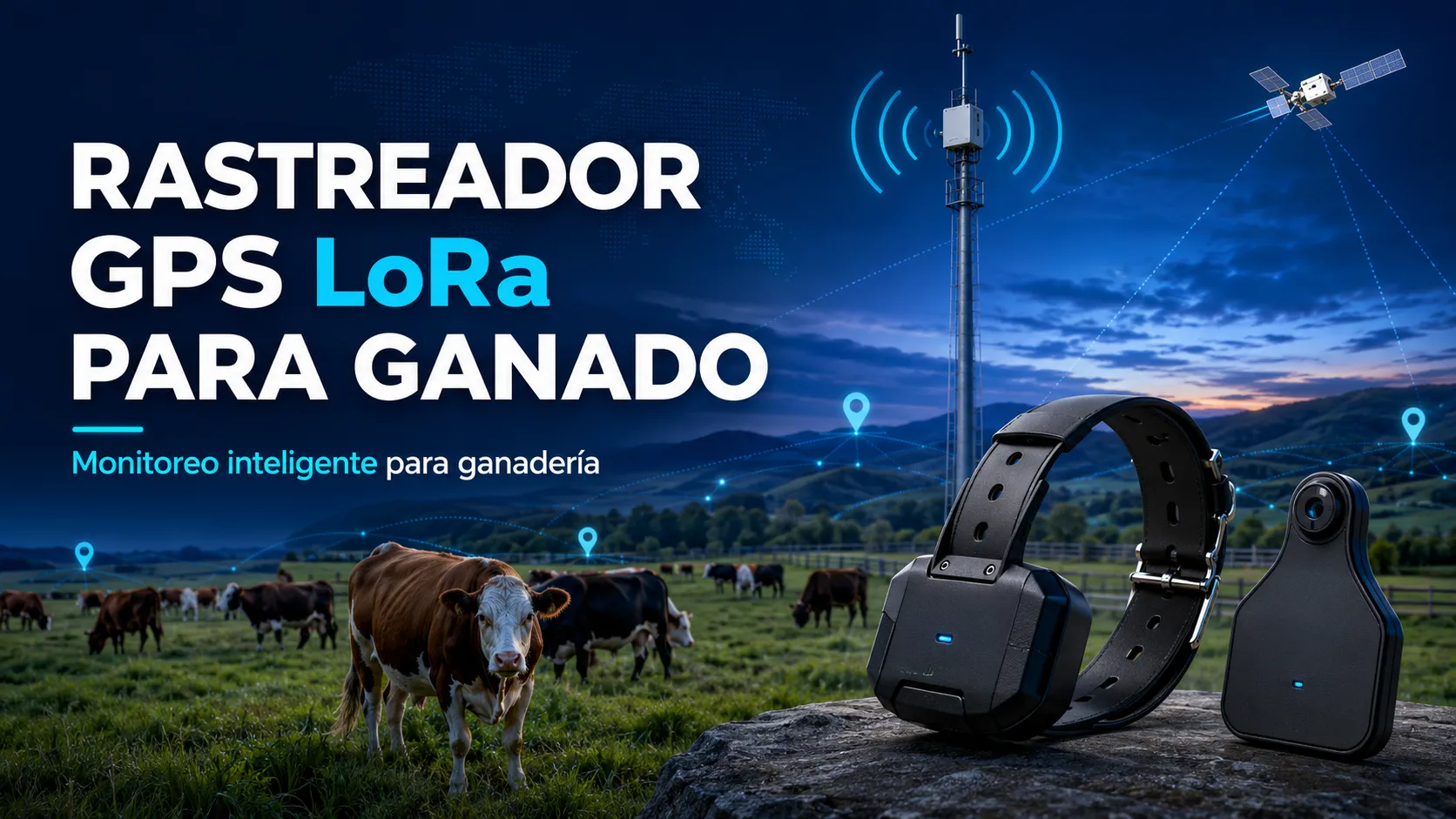
Managing livestock across extensive farms can be challenging, especially when animals graze freely in mountainous terrain, remote regions or areas with limited cellular coverage. A LoRa GPS tracker for cattle allows farmers to monitor the locations of cows, bulls, sheep and other livestock without continuously relying on mobile networks.
This technology combines satellite positioning with long-range, low-power LoRa communication. It helps farmers monitor their livestock, spend less time searching for missing animals and receive alerts when an animal leaves a designated grazing area.
What Is a LoRa GPS Tracker for Cattle?
A LoRa GPS tracker for cattle is an electronic device generally installed on an animal’s collar or ear. It uses GPS, BeiDou or another GNSS system to determine the animal’s location and transmits the data to a gateway through LoRa.
The gateway then uploads the information to a server and management platform through Ethernet, Wi-Fi, 4G or another available connection.
A complete system usually includes:
- LoRa GPS livestock trackers
- One or more LoRa gateways
- Antennas and communication equipment
- A server for data storage
- A web-based management platform
- A mobile application
- Maps, alerts and analysis tools
LoRa does not determine the animal’s location. Its role is to transmit the information collected by the device’s GPS module.
How Does LoRa Livestock Tracking Work?
The basic operation can be divided into five steps:
- The tracker wakes up according to its configured interval.
- Its GPS module obtains the animal’s coordinates.
- The device transmits the location through LoRa.
- A gateway receives the data and sends it to the server.
- The farmer views the animal’s location and device status on the platform.
The positioning interval can be configured according to the project’s requirements. A shorter interval provides more frequent location updates, while a longer interval reduces battery consumption.
Main Advantages of LoRa GPS Trackers for Cattle
Long-Range Communication
LoRa can transmit small amounts of data across long distances. In open rural environments, a properly installed gateway can cover an extensive area.
The actual communication range depends on factors such as:
- Antenna height
- Permitted transmission power
- Tracker antenna design
- Mountains, trees and buildings
- Terrain conditions
- LoRa frequency band
- Gateway location
For this reason, a coverage test should be performed before deploying the complete system.
Low Power Consumption
LoRa trackers can remain in low-power mode for most of the time and wake up only to obtain and transmit their locations.
Actual battery life depends on:
- Positioning frequency
- Transmission interval
- GPS signal quality
- LoRa transmission power
- Ambient temperature
- Battery capacity
- Frequency of animal movement
A properly designed device can operate for extended periods without frequent charging.
Lower Communication Costs
When a private LoRa network is used, each tracker does not necessarily require an individual SIM card. This can reduce communication costs, especially in projects involving hundreds or thousands of animals.
Operation in Areas with Limited Cellular Coverage
On many ranches and extensive farms, 4G coverage does not reach every location. The trackers can send data to a LoRa gateway installed at an elevated site, while only the gateway needs a connection to the server.
Support for Large Numbers of Devices
A LoRa network can receive data from many tracking devices. This makes the technology suitable for medium-sized and large livestock farms.
Main System Functions
Livestock Location Tracking
The platform displays the last known location of each animal. This helps farmers locate livestock that have become separated from the herd or moved into difficult-to-access areas.
Movement History
Stored data allows farmers to review the route of each animal over a selected period. Movement history can help analyze livestock behaviour and the use of different grazing areas.
Virtual Geofences
Farmers can define a permitted area on the map. When an animal leaves that area, the platform generates an alert.
To reduce false alarms caused by normal GPS deviations, a reasonable buffer zone should be configured, and an exit should be confirmed using two or more consecutive location records.
Inactivity Alerts
A lack of movement for an unusual period may indicate that the tracker has fallen off, the animal is trapped or there is a potential health problem.
An inactivity alert is a supporting management tool and does not replace a veterinary examination.
Low-Battery Notifications
The platform can display the battery level and send an alert when the device requires inspection, charging or battery replacement.
Offline Data Storage
If a tracker temporarily loses its LoRa connection, it can store location records locally and transmit them after reconnecting to the gateway.
LoRa GPS Collars and GPS Ear Tags
Two common tracker formats are available for livestock.
LoRa GPS Collar
A collar can accommodate a larger battery and antenna. It is suitable for cows, bulls and other large animals.
Its advantages include:
- Greater battery capacity
- Reliable GPS reception
- A larger LoRa antenna
- Easy installation and removal
- Support for additional sensors
LoRa GPS Ear Tag
A GPS ear tag is more compact and can combine animal identification with location tracking.
Its main advantages include:
- Compact design
- Individual animal identification
- Lower weight
- Long-term installation
- Efficient management of large livestock populations
The choice between a collar and an ear tag depends on the animal’s size, required battery life, installation method and farm conditions.
How to Select a LoRa GPS Tracker for Cattle
Before purchasing a system, evaluate the following factors:
- LoRa frequency band permitted in the destination country
- Actual communication range
- GPS positioning accuracy
- Estimated battery life under the intended operating mode
- Water and dust resistance
- Resistance to impact, mud and ultraviolet radiation
- Operating temperature
- Device weight and animal comfort
- Offline storage capacity
- Geofence and alert functions
- API compatibility
- Private server options
- Technical support from the manufacturer
A product should not be selected solely according to its theoretical communication distance or advertised battery life. Samples must be tested under actual operating conditions.
Importance of LoRa Gateway Installation
The LoRa gateway is an essential part of the system. It should be installed in a high, stable location with as few obstacles as possible.
Farms with mountains, valleys or forests may require several gateways to eliminate areas without coverage.
Before deployment, it is advisable to:
- Analyze the size and topography of the farm.
- Select potential installation locations.
- Measure RSSI, SNR and packet-loss rates.
- Test communication around the boundaries of the property.
- Adjust antenna height and orientation.
- Add gateways wherever necessary.
Solutions from Shenzhen Jinshengchang Technology
Shenzhen Jinshengchang Technology Co., Ltd. develops GPS tracking devices, LoRa equipment and IoT solutions for livestock-management projects.
Available solutions can include:
- LoRa GPS collars for cattle
- GPS ear tags for cattle and sheep
- Farm-animal tracking devices
- LoRa gateways
- Virtual geofences
- The lora8 tracking platform
- Web and mobile applications
- API integration
- Private servers
- OEM and ODM customization
- Firmware and communication protocol development
The company can customize the LoRa frequency, battery, data-transmission interval, enclosure, sensors and platform functions according to each project’s requirements.
Conclusion
A LoRa GPS tracker for cattle is a practical solution for monitoring animals across large farms, reducing livestock losses and improving management efficiency.
Its main advantages include long-range communication, low power consumption, the ability to use a private network and support for large numbers of devices.
A successful project should combine durable trackers, reliable GPS positioning, properly planned gateway deployment, a stable management platform and real-world coverage testing.
Shenzhen Jinshengchang Technology provides customized GPS and LoRa livestock-tracking solutions covering terminal devices, gateways, management platforms and technical project deployment.