Custom LoRaWAN PCB Design and Development Manufacturer | OEM LoRa IoT Boards
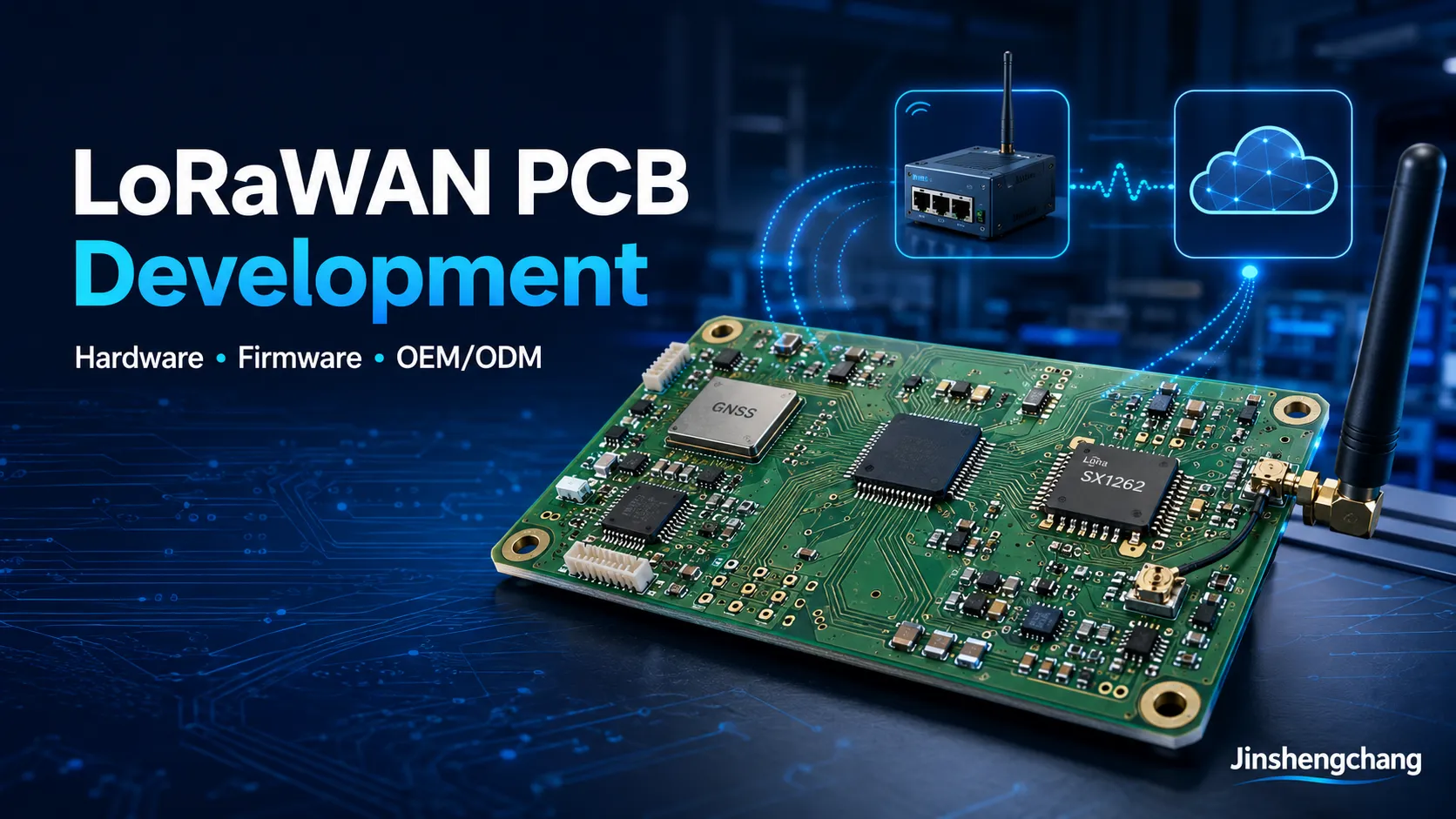
Developing a reliable LoRaWAN product involves much more than placing a LoRa module on a circuit board. A production-ready device requires RF engineering, antenna matching, low-power circuit design, embedded firmware, sensor integration, enclosure development, environmental testing and scalable manufacturing.
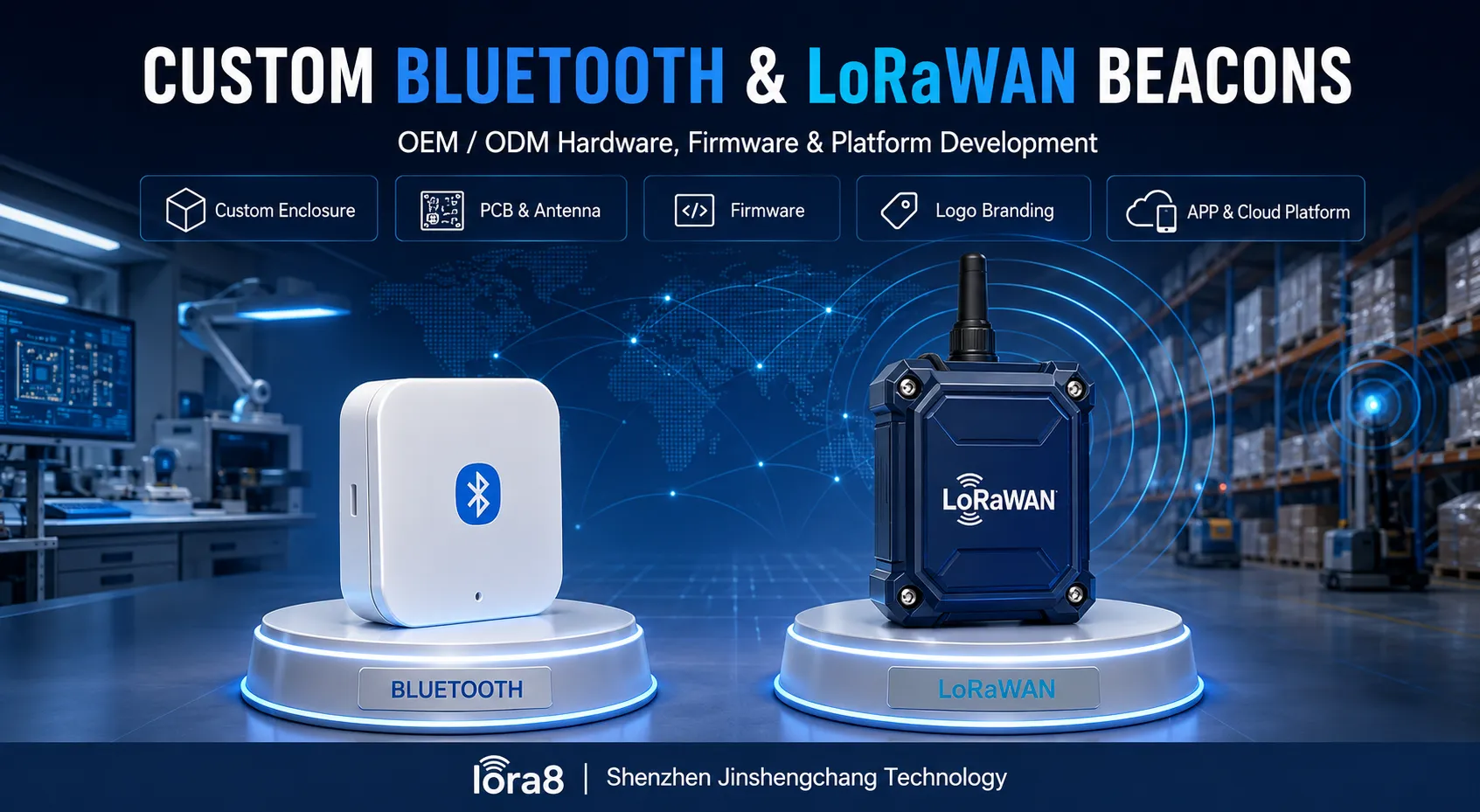
Shenzhen Jinshengchang Technology Co., Ltd. provides custom LoRaWAN PCB design, firmware development, IoT platform integration and OEM/ODM manufacturing for international IoT projects.
With approximately 13 years of experience in GPS tracking and IoT device development, Jinshengchang develops customized LoRaWAN boards and finished devices for livestock tracking, personnel safety, asset management, smart agriculture, water control, industrial monitoring and private LoRa networks.
Custom LoRaWAN PCB Development Services
Jinshengchang can support either a complete new product or the modification of an existing LoRaWAN device.
Our customization services include:
- LoRaWAN PCB schematic and layout design
- MCU and LoRa transceiver selection
- GNSS positioning circuit development
- Low-power hardware architecture
- RF circuit and antenna matching
- Embedded C firmware development
- LoRaWAN protocol integration
- Sensor and peripheral integration
- Prototype PCB and PCBA production
- Plastic and metal enclosure development
- Waterproof structure design
- Mobile application and web platform integration
- API and private server integration
- Pilot production and mass manufacturing
- OEM branding, packaging and labeling
Customers may choose a board-only solution, a complete electronic assembly or a finished IoT product ready for deployment.
Jinshengchang LoRaWAN Product Development Process
1. Project Requirement Evaluation
The development process starts with a technical requirement review. Our engineering team evaluates the intended application, installation environment, expected operating range and commercial objectives.
The initial evaluation normally covers:
- Product application
- Target country or deployment region
- LoRaWAN frequency band
- Required communication distance
- PCB size and mechanical limitations
- Power supply and battery capacity
- Required positioning technology
- Sensor requirements
- Data reporting interval
- Alarm and event logic
- Waterproof and environmental requirements
- Server or platform requirements
- Certification requirements
- Estimated order quantity
This stage helps determine whether an existing Jinshengchang product can be modified or whether a new PCB should be developed.
2. System Architecture and Component Selection
After confirming the requirements, Jinshengchang prepares the product architecture.
Depending on the project, the design may include:
- Low-power MCU
- LoRa or LoRaWAN transceiver
- GNSS positioning module
- Bluetooth Low Energy
- 4G, LTE-M or NB-IoT backup communication
- Accelerometer or motion sensor
- Temperature and humidity sensor
- Pressure sensor
- Magnetic switch
- SOS button
- Buzzer, vibration motor or LED
- Flash memory
- Secure element
- Rechargeable battery circuit
- Solar charging circuit
Component selection considers availability, lifecycle, energy consumption, PCB dimensions, radio performance and target production cost.
3. Schematic Design
Jinshengchang engineers create the electrical schematic according to the approved architecture.
The schematic design can include:
- MCU minimum system
- LoRa RF circuit
- GNSS circuit
- Sensor interfaces
- Battery protection
- Charging management
- Voltage regulation
- USB or programming interface
- ESD and surge protection
- External communication interfaces
- Debugging and production test points
Power-domain control is especially important for battery-powered LoRaWAN products. Unused sensors and positioning modules can be switched off through firmware-controlled circuits to reduce standby consumption.
4. PCB Layout and RF Engineering
LoRaWAN PCB layout has a direct effect on communication range and radio stability. Jinshengchang pays particular attention to the RF path, grounding, power integrity and antenna clearance.
PCB engineering considerations include:
- Controlled RF trace impedance
- Short RF transmission paths
- Continuous ground reference
- RF and digital circuit separation
- GNSS and LoRa interference control
- Antenna keep-out area
- Decoupling capacitor placement
- Power and ground plane design
- ESD protection placement
- Thermal management
- DFM and assembly requirements
The board size, layer count and component placement can be customized according to the enclosure and installation method.
Learn more about our GPS tracker PCB development process.
5. Antenna Design and Matching
Antenna performance cannot be evaluated independently from the PCB and enclosure. Battery location, plastic thickness, metal parts, cables and installation position can all affect the RF result.
Depending on the product, Jinshengchang can develop or integrate:
- PCB antennas
- FPC antennas
- Spring antennas
- Ceramic antennas
- External SMA antennas
- IPEX-compatible antennas
- Separate LoRa and GNSS antennas
- Custom antennas for waterproof enclosures
The antenna design can be adjusted according to the required frequency band and mechanical structure.
6. Embedded C Firmware Development
Jinshengchang provides custom embedded firmware development for LoRaWAN IoT boards. Firmware functions are designed around the actual application instead of using the same logic for every device.
Firmware development may include:
- LoRaWAN network joining
- OTAA or ABP activation
- Uplink and downlink communication
- Confirmed and unconfirmed messages
- Adaptive Data Rate
- Configurable transmission intervals
- GNSS acquisition control
- Sensor data collection
- Motion-triggered reporting
- Geofence detection
- SOS alarm processing
- Battery voltage reporting
- Offline data storage
- Device parameter configuration
- Watchdog and fault recovery
- Firmware upgrade support
- Custom binary communication protocol
The reporting strategy can be optimized to balance tracking frequency, communication reliability and battery life.
Read more about custom LoRaWAN firmware development in C.
7. Prototype and PCBA Production
After the schematic and PCB layout are reviewed, prototype boards are manufactured and assembled.
Prototype development normally includes:
- PCB fabrication
- SMT component assembly
- Manual assembly of special components
- Firmware programming
- Initial power-on verification
- Interface testing
- RF communication testing
- GNSS positioning testing
- Sensor function testing
Engineering samples can be prepared for customer evaluation before pilot production.
8. Engineering Validation and Testing
Jinshengchang performs engineering validation according to the product’s application and environment.
Testing may include:
- Input voltage testing
- Charging and battery protection testing
- Sleep-current measurement
- Peak-current measurement
- LoRa communication testing
- Antenna performance evaluation
- GNSS positioning tests
- Sensor accuracy tests
- Data reporting verification
- Downlink command testing
- Platform communication testing
- Long-duration operation testing
- High- and low-temperature testing
- Waterproof testing
- Drop and vibration testing
- Production programming tests
Test items depend on the final product specification and project requirements.
9. Enclosure and Mechanical Development
Jinshengchang can develop the complete enclosure in addition to the LoRaWAN PCB.
Mechanical customization can include:
- Industrial plastic enclosure
- Wearable badge enclosure
- Livestock collar housing
- Electronic ear tag structure
- Asset tracker enclosure
- Outdoor waterproof housing
- Smart valve controller enclosure
- Customized mounting brackets
- Logo printing or laser engraving
- Color customization
- Label and serial-number design
- New injection mold development
PCB and enclosure development are coordinated to improve antenna performance, assembly efficiency and environmental protection.
10. Pilot Production and Mass Manufacturing
Before mass production, a pilot batch can be assembled to confirm manufacturing consistency.
The production process may include:
- Incoming component inspection
- SMT assembly
- AOI inspection
- Firmware programming
- Functional testing
- RF communication testing
- Device ID registration
- Platform activation
- Battery and charging verification
- Final assembly
- Aging test
- Packaging inspection
- Shipment preparation
Jinshengchang operates under an ISO 9001 quality-management system and supports product development from initial prototypes to volume production.
Typical Custom LoRaWAN PCB Parameters
The following table represents available development options. Final specifications are determined by the project requirements.
| Technical Item | Available Options |
|---|---|
| Wireless technology | LoRa or LoRaWAN |
| LoRaWAN device class | Class A, Class B or Class C according to application |
| Activation method | OTAA or ABP |
| Frequency bands | CN470, IN865, EU868, RU864, US915, AU915, KR920 and AS923 variants |
| MCU | Low-power MCU selected according to memory, interface and processing requirements |
| LoRa transceiver | SX1262, SX127x or another suitable RF solution |
| Positioning | GPS, BDS, GLONASS and Galileo, depending on module configuration |
| Optional communication | BLE, Wi-Fi, 4G, LTE-M or NB-IoT |
| Sensor interfaces | I²C, SPI, UART, GPIO and ADC |
| Optional sensors | Motion, temperature, humidity, pressure, light and magnetic sensors |
| Antenna options | PCB, FPC, spring, ceramic, IPEX or SMA antenna |
| Power supply | Rechargeable battery, replaceable battery, external DC or solar power |
| Charging | USB, magnetic charging, docking station or solar charging |
| Data storage | Internal flash or external memory |
| Firmware | Customized embedded C firmware |
| Device configuration | Downlink, Bluetooth, USB, application or server |
| Server protocol | MQTT, TCP, UDP, HTTP or customized protocol |
| Platform | Jinshengchang lora8 platform, customer server or private deployment |
| Protection level | Designed according to enclosure and application requirements |
| Product branding | Custom logo, label, enclosure color, packaging and user manual |
Low-Power LoRaWAN Board Design
Battery life is one of the most important requirements for LoRaWAN products. However, battery endurance depends on more than battery capacity.
Jinshengchang optimizes energy consumption through:
- MCU deep-sleep management
- Sensor power-domain switching
- GNSS acquisition-time control
- Configurable positioning intervals
- Motion-based wake-up
- Event-triggered reporting
- LoRaWAN data-packet optimization
- Adaptive Data Rate
- Battery voltage monitoring
- Reduced offline power consumption
For example, a stationary asset tracker may send fewer location reports when no movement is detected. A personnel safety badge may remain in a low-power state but immediately wake when the SOS button is pressed. A livestock collar may use different reporting intervals during normal activity and abnormal movement.
Battery-life estimates are calculated after the communication interval, GNSS usage, environmental temperature, battery chemistry and network conditions have been confirmed.
Products That Jinshengchang Can Develop
LoRaWAN Livestock GPS Collar PCB
The board can integrate LoRaWAN communication, GNSS positioning, motion detection and battery monitoring for cattle, sheep, goats, horses and other animals.
Available functions include:
- Periodic location reporting
- Virtual fence alarms
- Movement and activity monitoring
- Low-battery alarms
- Offline data storage
- Waterproof enclosure
- Solar-assisted charging
- Customized collar structure
See Jinshengchang’s LoRa GPS collar OEM solutions.
LoRaWAN Personnel Badge and SOS Tracker PCB
Wearable LoRaWAN badge boards can be developed for factory employees, mine workers, construction teams, hospital staff and visitors.
Functions may include:
- Indoor and outdoor positioning
- SOS emergency button
- Man-down detection
- Motion monitoring
- Entry and exit alarms
- Restricted-area alerts
- Attendance records
- Rechargeable battery
- Buzzer and vibration alerts
Learn more about the LoRaWAN badge tracker for personnel monitoring.
LoRaWAN Asset Tracker PCB
Custom asset-tracking boards can be used for containers, trailers, machinery, tools and high-value equipment.
Possible functions include:
- GNSS location
- Movement detection
- Geofence alarms
- Tamper alarms
- Temperature monitoring
- Long-term battery operation
- Historical route records
- Customized reporting intervals
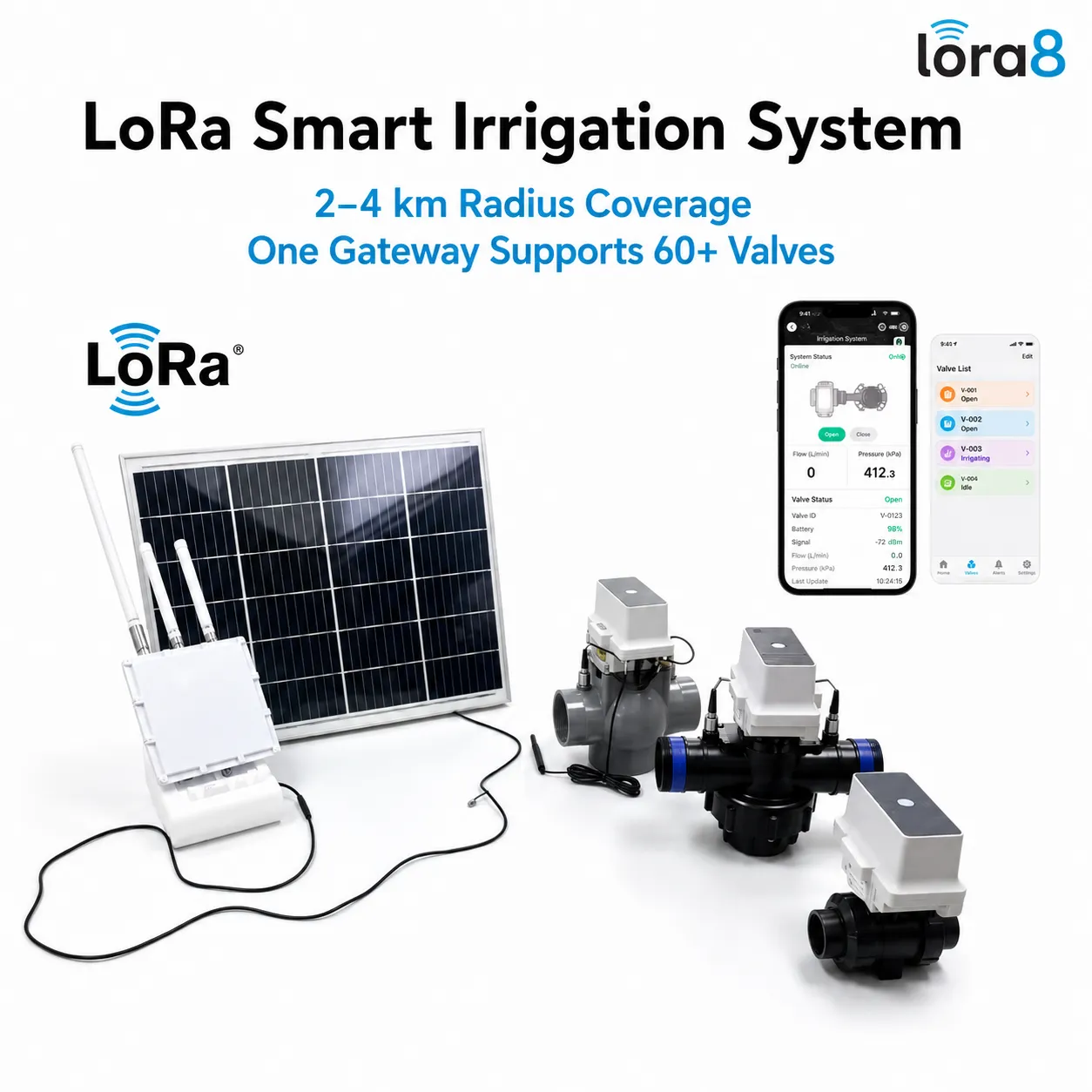
LoRaWAN Smart Water Valve and Sensor Board
Jinshengchang can design LoRaWAN controller boards for irrigation, water distribution and industrial fluid-control projects.
The board can support:
- Remote valve opening and closing
- Flow-meter input
- Water-pressure monitoring
- Leakage alarms
- Scheduled irrigation
- Battery or solar power
- Manual override
- Platform control
- Local automatic logic
See our LoRaWAN smart water valve development solution.
Industrial LoRaWAN Gateway and Terminal Board
Custom boards can also be developed for LoRaWAN gateways, data collectors and industrial communication terminals.
Depending on the project, they may support:
- Ethernet
- Wi-Fi
- 4G backhaul
- RS232
- RS485
- Modbus
- Digital inputs and outputs
- Relay control
- External LoRa antennas
- Local data storage
- Private server communication
lora8 IoT Platform Integration
Jinshengchang can connect custom LoRaWAN devices to the lora8 IoT management platform.
The platform can provide:
- Real-time device location
- Device status monitoring
- Historical routes
- Virtual fence management
- Alarm notifications
- Battery monitoring
- Device grouping
- User and role management
- Remote parameter configuration
- Map display
- Data reports
- Multilingual interfaces
- Android, iOS and web access
For customers operating their own software, Jinshengchang can provide communication-protocol documentation and API integration support. Private server deployment can also be evaluated according to the project.
OEM and ODM Cooperation Options
Jinshengchang provides several cooperation levels.
Existing Product Customization
Suitable for projects requiring faster delivery and lower development costs.
Customization can include:
- Customer logo
- Frequency band
- Firmware functions
- Reporting interval
- Alarm logic
- Platform account
- Product label
- Packaging
Custom PCB Development
Suitable when an existing product cannot meet the required dimensions, interfaces, sensors or power design.
This service can include:
- New schematic
- New PCB layout
- Custom components
- New antenna
- Customized firmware
- Prototype production
- Test fixtures
Complete ODM Product Development
Jinshengchang can develop the complete device, including:
- PCB
- Firmware
- Antenna
- Battery
- Enclosure
- Mobile application
- Web platform
- API
- Packaging
- Production testing
White-Label Manufacturing
Finished LoRaWAN products can be supplied with the customer’s brand, product label, packaging and manuals.
Why Choose Jinshengchang?
Jinshengchang combines hardware, firmware, platform and manufacturing capabilities within one development system.
Key advantages include:
- Approximately 13 years of GPS and IoT experience
- In-house hardware engineering
- Embedded C firmware development
- LoRa and LoRaWAN integration experience
- GNSS positioning technology
- RF and antenna engineering
- Android, iOS and web platform support
- Prototype and mass-production capability
- ISO 9001 quality-management system
- OEM, ODM and white-label services
- Multi-frequency support for international markets
- Custom communication protocol and API integration
- Experience with livestock, personnel, asset and industrial IoT products
Discover more about Jinshengchang’s end-to-end LoRaWAN development capabilities.
Information Required for a Custom LoRaWAN PCB Quotation
To receive an accurate technical proposal, customers should provide as much of the following information as possible:
- Product application
- Target market or deployment country
- LoRaWAN frequency band
- Required PCB dimensions
- Power supply and expected battery life
- Communication and positioning requirements
- Required sensors and interfaces
- Data-reporting interval
- Alarm and control logic
- Enclosure and waterproof requirements
- Server or IoT platform requirements
- Prototype quantity
- Estimated annual order quantity
- Required certifications
- Target development schedule
If a complete specification is not available, Jinshengchang can assist with technical requirement analysis.
Frequently Asked Questions
Can Jinshengchang develop a completely new LoRaWAN PCB?
Yes. Jinshengchang can develop a new schematic, PCB layout, firmware, antenna configuration and enclosure based on the customer’s application and technical requirements.
Can you modify an existing LoRaWAN product?
Yes. Depending on the existing product architecture, Jinshengchang can modify the firmware, reporting interval, alarm logic, frequency band, battery, enclosure, branding and communication protocol.
Do you provide embedded firmware source code?
Source-code availability depends on the commercial agreement, development scope and intellectual-property arrangement. This should be confirmed before the project begins.
Can the device connect to our own server?
Yes. Custom LoRaWAN devices can be integrated with the customer’s server through MQTT, TCP, UDP, HTTP, REST API or another agreed protocol.
Which LoRaWAN frequency bands are available?
Development can support CN470, IN865, EU868, RU864, US915, AU915, KR920 and AS923 regional variants. The correct band must be selected according to the deployment country and local radio regulations.
Can you manufacture the finished product?
Yes. Jinshengchang can provide PCB assembly, firmware programming, enclosure assembly, functional testing, labeling, packaging and volume production.
What is the minimum order quantity?
Prototype and production quantities depend on PCB complexity, component procurement, enclosure requirements and customization level. Contact Jinshengchang for project-specific information.
Can you assist with product certification?
Jinshengchang can provide technical documents and engineering support for certification preparation. The exact certification process depends on the product, target market and selected components.
Contact Jinshengchang
For custom LoRaWAN PCB design, OEM LoRa IoT boards, embedded firmware development or complete IoT product manufacturing, contact Jinshengchang with your project requirements.
Company: Shenzhen Jinshengchang Technology Co., Ltd.
Website: https://www.lora8.net
IoT Platform: https://gps.lora8.net
Mr. Wang Tao
Mobile/WhatsApp: +86 134 8088 1974
Ms. Hu
Mobile/WhatsApp: +86 177 2242 0256
Email: jietainana@gmail.com
Send us your product application, target frequency, required functions, PCB dimensions and estimated order quantity. Our engineering team can evaluate the development requirements and propose an appropriate LoRaWAN hardware solution.