LoRa Employee Tracking Badge with SOS – Low-Power Indoor Staff Location and Worker Safety System
💬 Chat on WhatsAppLoRa Employee Tracking Badge with SOS – Low-Power Indoor Staff Location and Worker Safety System
Managing employees across factories, warehouses, construction sites and industrial facilities requires more than a conventional identification card. Companies may need to know whether workers have entered hazardous areas, whether a lone worker has stopped moving or whether an employee has requested emergency assistance.
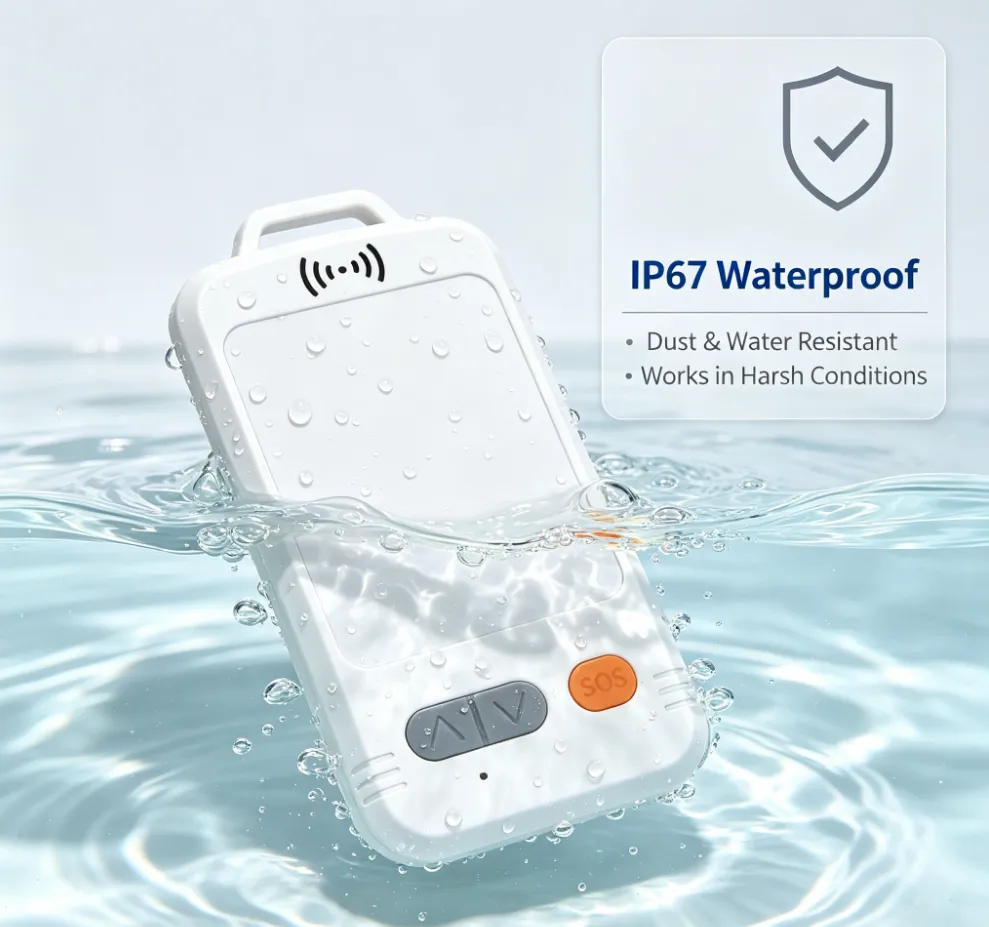
A LoRa employee tracking badge combines personnel identification, low-power wireless communication, indoor or outdoor positioning, SOS alerts and safety monitoring in a wearable device. It can be worn as an employee ID card, clipped to work clothing or attached to personal protective equipment.
The system is suitable for employee location management, industrial safety, emergency response, attendance and contractor supervision.
What Is a LoRa Employee Tracking Badge?
A LoRa employee tracking badge is a compact wearable device that transmits employee identity, alarm and location-related data through a private LoRa or standard LoRaWAN network.
Depending on the project, the badge can integrate:
LoRa or LoRaWAN communication
GPS and BeiDou positioning
Bluetooth Beacon scanning
Wi-Fi positioning
RFID or NFC identification
SOS emergency button
Fall and no-motion detection
Buzzer, vibration motor and LED
Rechargeable battery
Tamper or removal detection
Unlike a conventional RFID card that normally works only near a reader, a LoRa badge can transmit small amounts of data over a considerably larger area. Actual communication range depends on the environment, gateway placement, antenna design and radio-frequency regulations.
How Does the System Work?
A complete LoRa employee tracking system normally includes four components:
- Employee badges: Collect and transmit identity, alarm, movement and positioning data.
- Positioning infrastructure: LoRa gateways, Bluetooth beacons, Wi-Fi access points or RFID checkpoints.
- Server and database: Receive, process and store personnel and device information.
- Management platform: Display employee zones, alarms, attendance records and device status.
Each badge is assigned to a specific employee, visitor or contractor. When the badge uploads data, the platform identifies the person and updates the corresponding status.
Authorized managers can view:
Employee name and department
Current or last reported work zone
Entry and exit records
SOS and safety alarms
Device battery level
Online or offline status
Historical events
Assigned badge information
LoRa Communication and Positioning Are Different
LoRa is mainly used to transmit data. It does not automatically provide precise indoor positioning. The location method must be selected according to the environment and required accuracy.
GPS and BeiDou Positioning
GPS and BeiDou are suitable for outdoor construction sites, industrial campuses, ports and open storage areas. Satellite positioning is usually less reliable inside buildings, underground areas and metal structures.
Bluetooth Beacon Positioning
Bluetooth beacons can be installed in rooms, corridors, workshops and controlled areas. The badge scans the nearest beacon and uploads its identifier through LoRa.
This architecture is suitable for room-level or zone-level indoor positioning and normally requires less infrastructure than high-precision real-time location systems.
Wi-Fi Positioning
The badge can scan surrounding Wi-Fi access points and report their identifiers and signal strengths. The platform estimates the location by comparing this information with a configured Wi-Fi database.
RFID Checkpoints
RFID or NFC can be used at gates, entrances and inspection points. This method confirms that a worker has passed a specific location but does not provide continuous tracking between checkpoints.
Hybrid Positioning
A practical industrial solution can combine:
GPS for outdoor positioning
Bluetooth for indoor zone detection
RFID for access points
LoRa for long-range data transmission
The hybrid design allows one badge to operate across both indoor and outdoor work environments.
SOS Emergency Button
The SOS button enables employees to request help during accidents, medical emergencies, security incidents or equipment failures.
When the button is pressed, the badge can immediately send:
Employee identification
Alarm type
Alarm time
Last known location or zone
Battery level
Device status
The management platform can display a pop-up alarm, activate an audible warning and notify supervisors, security personnel or emergency-response teams.
To reduce accidental activation, the SOS function can require a long press or a configurable button sequence.
Electronic Geofencing
Administrators can create digital work zones for production lines, warehouses, chemical storage rooms, high-voltage areas and equipment rooms.
The platform can generate an alert when a worker:
Enters a restricted area
Leaves an authorized work zone
Remains in a hazardous area too long
Enters an area outside the assigned shift
Misses a required checkpoint
Approaches a dangerous location
Zone alarms improve visibility, but they should support—not replace—physical access control, safety procedures and employee training.
Lone-Worker Protection
Employees working alone may be unable to call for help after a fall or loss of consciousness. A badge with motion and orientation sensors can provide additional safety functions.
Possible alerts include:
Manual SOS alarm
Fall detection
Man-down alarm
No-motion alert
Extended-stay warning
Badge removal warning
Low-battery warning
Offline-device alert
Sensor thresholds must be tested in the real workplace. Climbing, bending, running, vehicle vibration and machine operation may otherwise cause false alarms.
Attendance and Work-Zone Management
The LoRa badge can also support employee attendance and zone-based management.
The platform may record:
Arrival and departure time
Entry into a workshop or warehouse
Time spent in designated zones
Shift attendance
Visitor and contractor movements
Inspection-point completion
Department and team statistics
Attendance and location functions should be configured according to applicable labor laws, privacy regulations and company policies.
Low-Power Design
Battery life is affected by the positioning technology, upload interval, movement, network quality, alarm settings and battery capacity.
Power-saving strategies can include:
Scheduled data reporting
Sleep mode during inactivity
Motion-triggered wake-up
Longer upload intervals in safe zones
Immediate reporting during emergencies
Configurable GPS activation
Low-battery notifications
For example, the badge can normally upload at a low frequency and automatically increase the reporting frequency after an SOS alarm or geofence violation.
Actual battery life should be verified through field testing under real operating conditions.
Web Platform and Mobile App
The management platform gives authorized users a centralized view of employees, badges, zones and alarm events.
Typical functions include:
Personnel location and zone display
Electronic maps and floor plans
Real-time alarm dashboard
Historical event playback
Employee and badge binding
Department and project management
Battery and offline monitoring
Attendance reports
Multiple user roles
Android and iOS applications
API and SDK integration
Private server deployment
Role-based permissions can prevent unauthorized users from viewing sensitive employee information.
Privacy and Data Security
Employee location information must be managed responsibly. The company should clearly define why the information is collected, who can access it and how long it will be stored.
A responsible system should consider:
Employee notification and consent when required
Encrypted communication
Secure account authentication
Role-based access permissions
Data-retention rules
Operation and audit logs
Minimum necessary data collection
Compliance with local labor and privacy laws
The purpose of the system should focus on workplace safety, emergency response and legitimate operational management.
Application Scenarios
The LoRa employee tracking badge can be used in:
Manufacturing factories
Warehouses and logistics centers
Construction sites
Mines and tunnels
Chemical plants
Oil and gas facilities
Power plants
Hospitals and care institutions
Ports and container yards
Agricultural parks
Large office campuses
Emergency-response projects
Each environment requires a different gateway layout, positioning method and alarm configuration.
OEM and ODM Customization
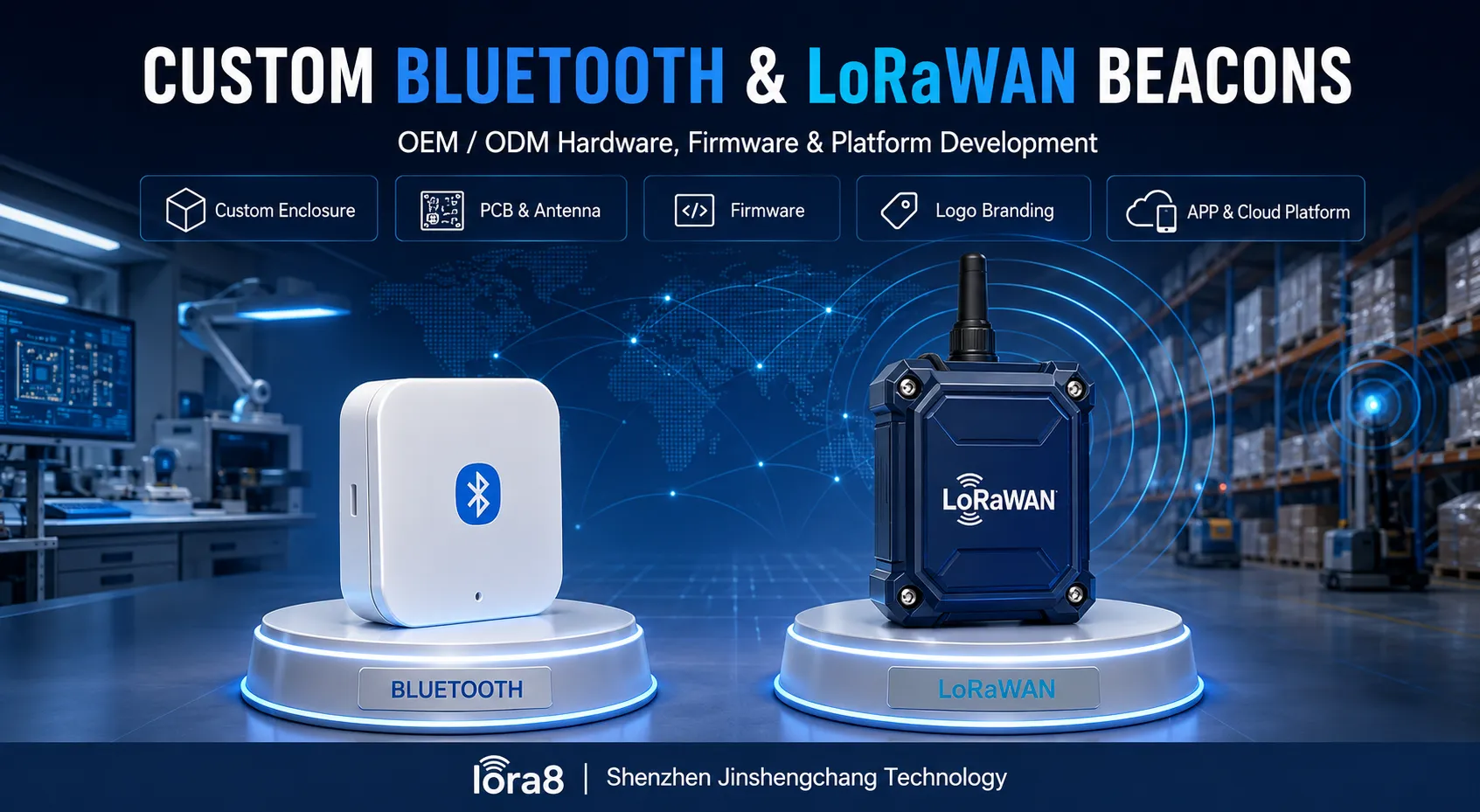
Shenzhen Jinshengchang Technology Co., Ltd. provides OEM and ODM development for LoRa employee tracking badges and personnel safety systems.
Available customization options include:
Badge housing, dimensions and wearing method
Private-mold development
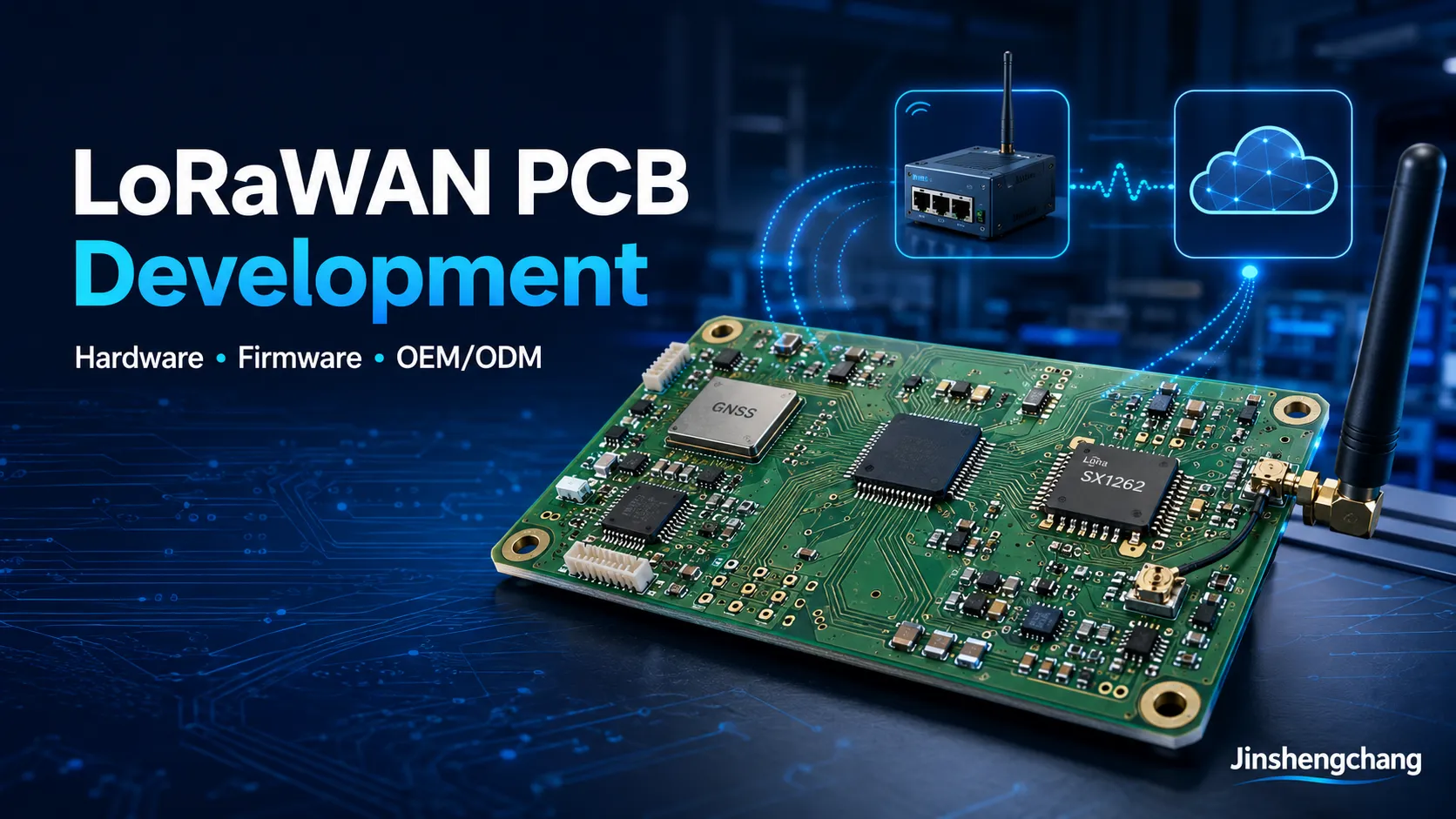
PCB and antenna design
LoRa or LoRaWAN frequency configuration
GPS, BeiDou, Bluetooth, Wi-Fi, RFID and NFC
SOS button and alarm logic
Fall and no-motion detection
Battery capacity and charging method
Firmware and communication protocols
Customer branding and packaging
Android and iOS applications
Multilingual web platform
API and SDK integration
Private-cloud or local-server deployment
Jinshengchang combines LoRa wearable hardware, gateways and the lora8 IoT management platform to provide an integrated employee-positioning and industrial-safety solution.
Recommended Deployment Process
Before deploying the system across an entire facility, the customer should confirm:
Is room-level, zone-level or meter-level positioning required?
Will the badge be used indoors, outdoors or in both environments?
Which LoRa frequency band is permitted locally?
How many gateways and Bluetooth beacons are required?
Which emergency alarms are necessary?
How quickly must an SOS message reach the platform?
What battery life is required?
Is private deployment or API integration needed?
What privacy and data-storage rules apply?
How will coverage and false alarms be tested?
A pilot installation should first be completed in a representative work area. The pilot can verify signal coverage, positioning results, battery performance, alarm delivery and user comfort before mass deployment.
Conclusion
A LoRa employee tracking badge with SOS can provide a practical combination of identification, personnel location, emergency alarms and low-power communication.
By integrating LoRa with GPS, Bluetooth, Wi-Fi or RFID, the system can support indoor and outdoor employee management, electronic geofences, lone-worker protection, attendance and industrial safety.
Jinshengchang Technology can customize the badge hardware, gateways, firmware, Android and iOS applications, APIs and the lora8 platform according to the requirements of different personnel-tracking projects.